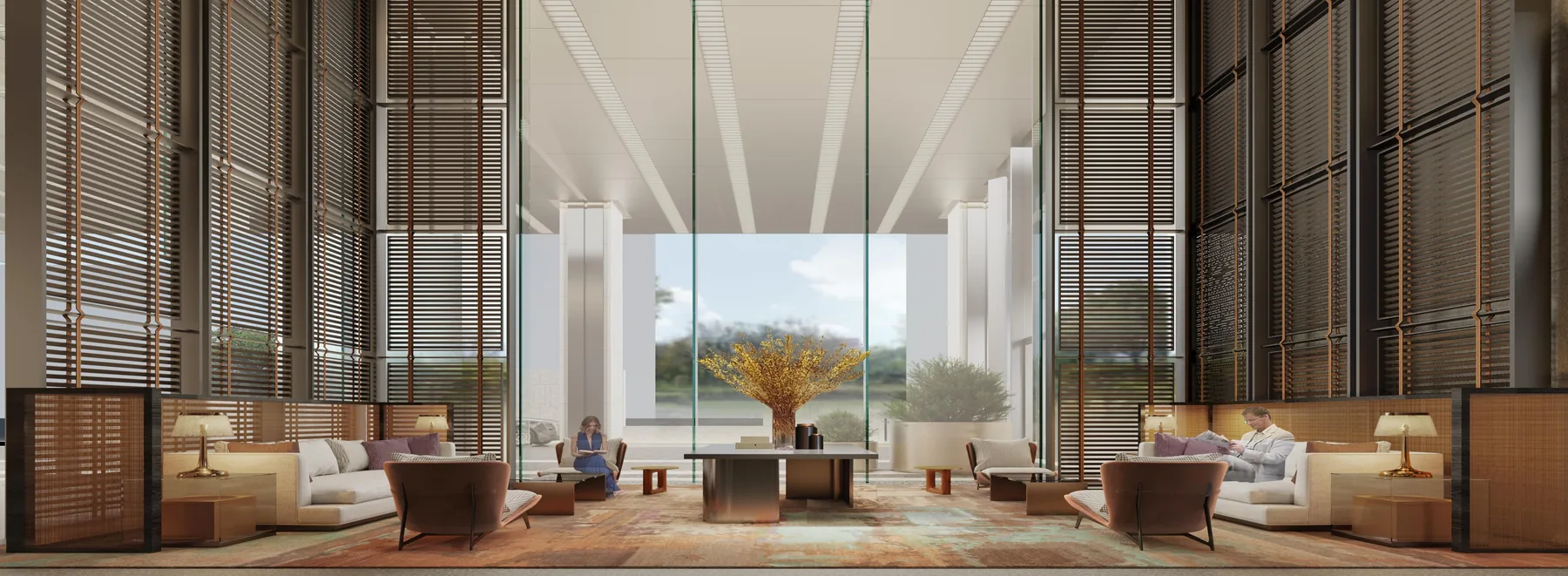
Palm Jumeirah is not a neighbourhood. It is a condition. The salt air corrodes ironwork. The sun bleaches fabric. The humidity tests every adhesive, every veneer, every stone seal. An interior designer working on the Palm who does not begin with these facts — who begins instead with a mood board — is designing a room that will age badly in a place that tests ageing daily.
We begin with the material brief. Stone must be specified for thermal cycling — the temperature delta between an air-conditioned interior and the Gulf summer can crack unacclimatised marble at the threshold. Timber species must be chosen for dimensional stability in fluctuating humidity. Fabrics must carry a UV-resistance rating that justifies the investment. Ironwork — balustrades, door handles, decorative screens — must be finished in marine-grade coatings or will pit within two years.
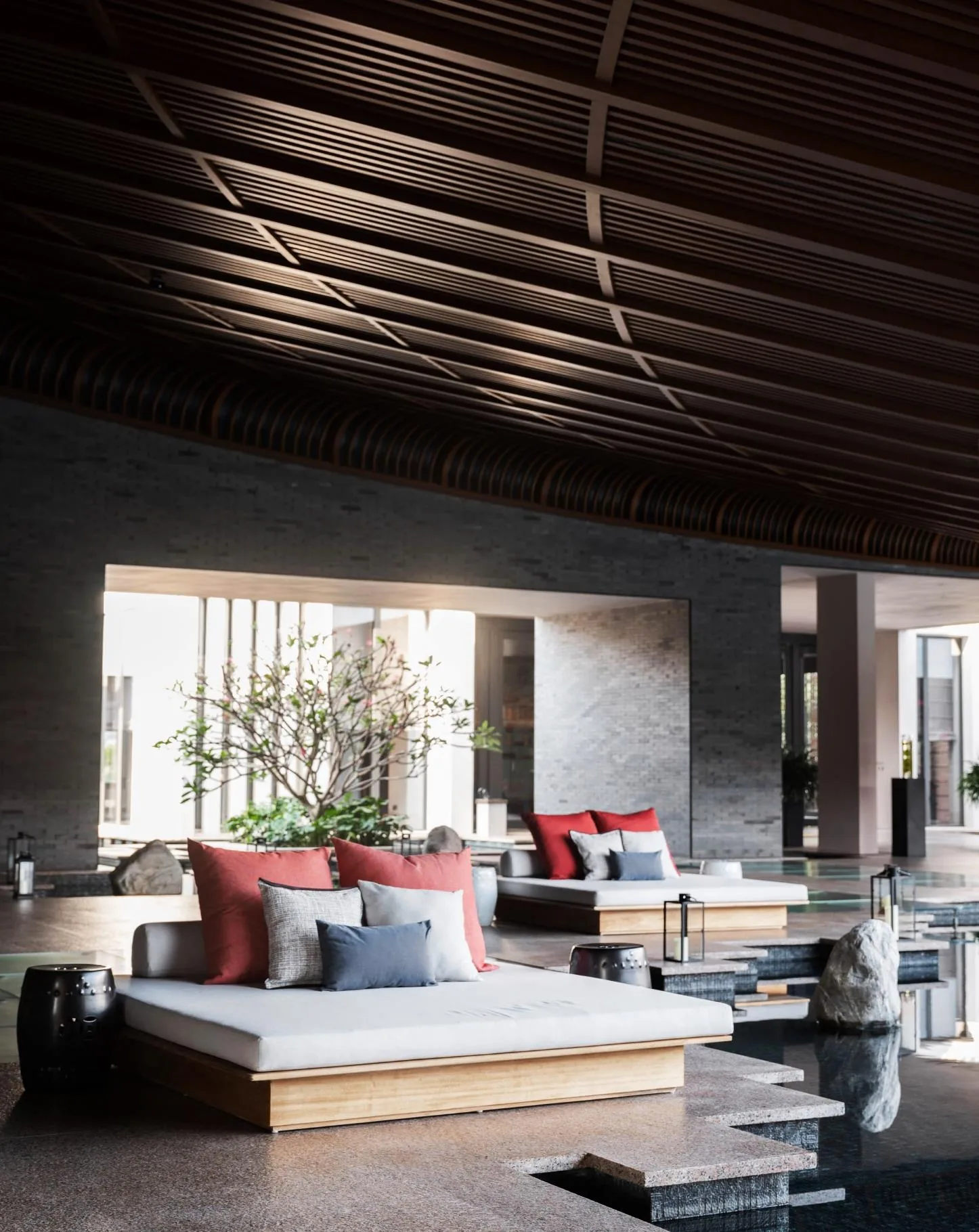
The villa typologies on the Palm vary more than most clients expect. The original frond villas — Garden Homes, Canal Cove, Signature Villas — were designed in the early 2000s and have floor plans that reflect the developer's priorities at the time: large footprints, generous gardens, but interior proportions that can feel compressed. The newer custom-built mansions on the frond tips and the trunk carry different proportions — taller ceilings, wider spans, more considered daylighting.
Renovating a twenty-year-old frond villa is a different project from fitting out a new-build mansion. The older villas often require structural assessment, MEP upgrades, and waterproofing remediation before the interior work can begin. The Nakheel NOC process governs what can be changed and what cannot. We manage both the approvals and the design, so the programme is not split across two firms with different timelines.
Light is the design challenge that separates Palm interiors from mainland Dubai. The water reflects. The sky is higher and harder. South-facing rooms receive direct sun for most of the day. West-facing rooms are unwatchable in the afternoon without filtration. Our lighting design addresses both the artificial layer — layered, dimmable, tuned — and the natural layer — deep reveals, perforated screens, translucent stone panels that transform glare into warmth.
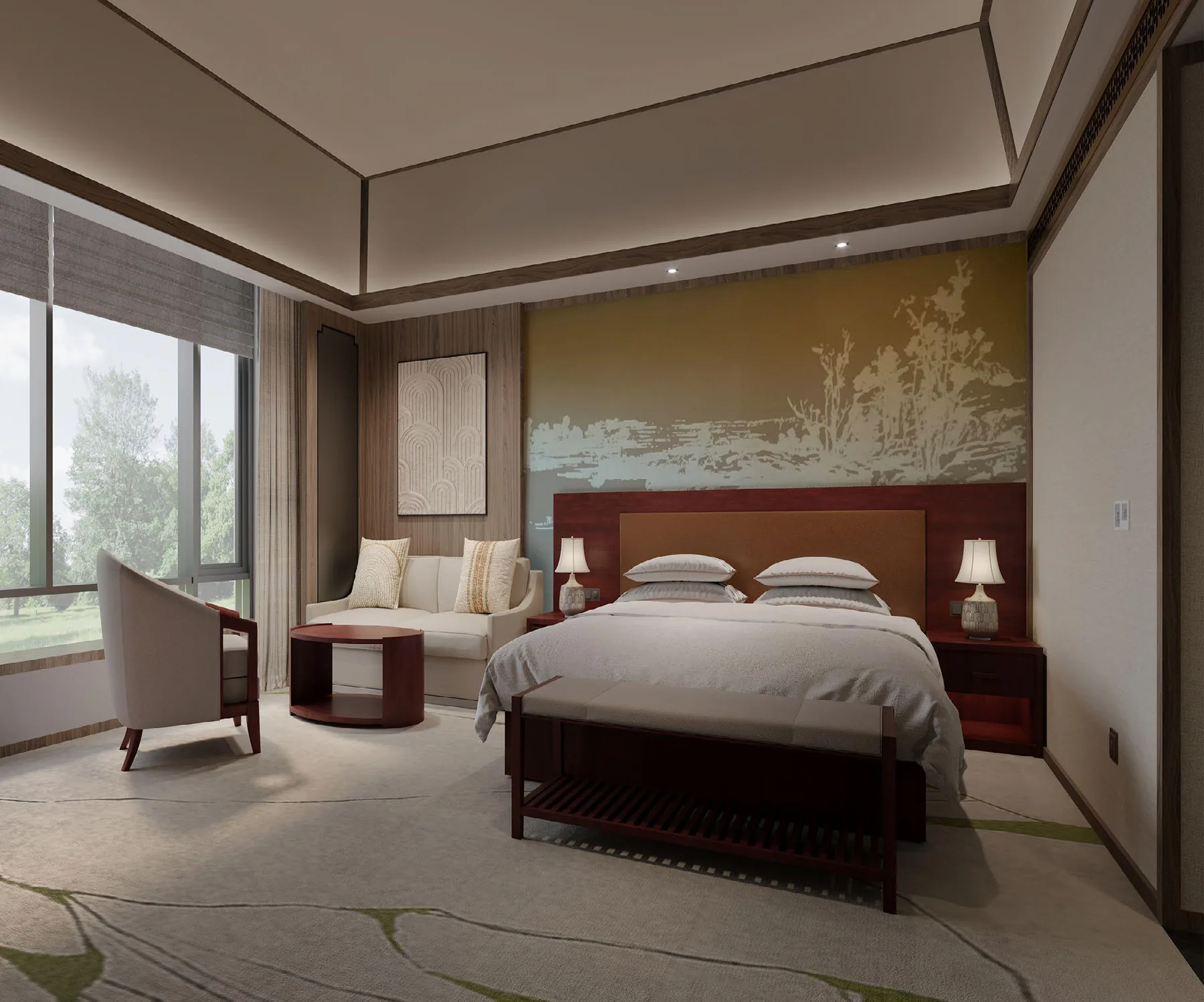
The garden and pool are part of the interior brief on the Palm. Many villas integrate indoor and outdoor living through sliding glass walls, covered terraces, and outdoor kitchens. The landscape must be climate-appropriate — salt-tolerant species, efficient irrigation, shade structures that reduce the thermal load on the villa. We hold the landscape scope within the same contract as the interior, so the transition between inside and outside is resolved by one hand.
Every Palm Jumeirah commission begins with a site visit. We walk the property, read the building, note the orientation, test the light at different hours, and return with a written brief. The brief is the foundation of the design — and on the Palm, the brief begins with the climate.